A Changing Tide: San Francisquito Creek Project
Story by Maddie Ginn.
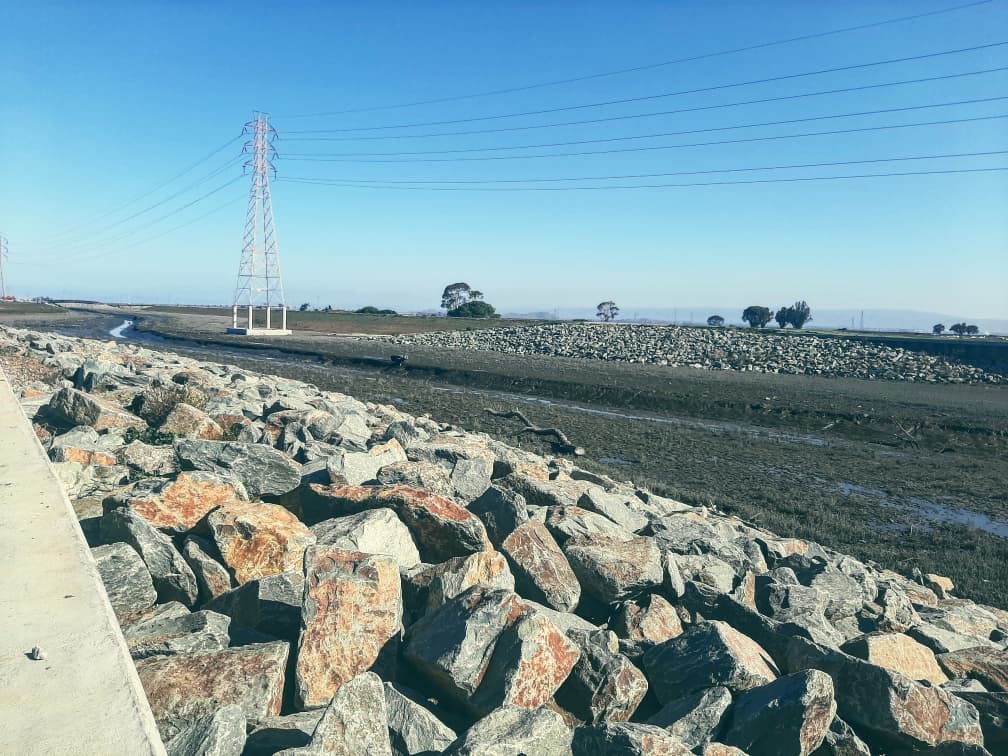
Just as our world is changing rapidly in the wake of climate change, restoration strategies to protect and perpetuate our communities, towns, cities, and environments must change also. Our team at Central Coast Wilds (CCW) native plant nursery and at Ecological Concerns Inc. have worked diligently to do just that for the San Francisquito Creek Flood Reduction, Ecosystem Restoration, and Recreation Project. We are proud to be a part of a changing tide with floodplain mitigation and riverbank revegetation we completed in response to predicted sea level rise in the area. As a result of our project, 7,000 tidal marsh and marsh transition plants have been replanted along several reaches of the river at the city limits of Palo Alto and East Palo Alto.
The species selected for this project were chosen to support inundation from the San Francisco Bay tides twice daily on the preexisting floodplain surfaces. Ambrosia psilostachya, Artemisia douglasiana, Euthamia occidentalis, Limonium californicum, Salicornia pacifica, and Symphyotrichum chilense propagules were collected from areas nearby the project site. These propagules were then delivered to CCW for propagation, where specially trained staff grew them out to beautiful, well rooted plants ready for their final destination.
All of the plants for the San Francisquito project were grown in our CalPhytos, High Phytosanitary BMP nursery. Production in this nursery requires strict protocols including heat-treatment of all soil media, comprehensive documentation of all BMP processes, specialized BMP-trained staff, and stringent sterilization and cleanliness protocols for all propagules at every stage of production.
Prior to being delivered to the site these plants were tested and analyzed by the California Department of Food and Agriculture as one last quality-control check prior to outplanting. We are excited to see how these plants fare in the upcoming years, and the valuable ecosystem services they will provide.